
What the data says about where AI is actually going.. Ai Reports.
TL;DR
AI trends in 2026 are no longer about finding the best model. They are about how AI is applied inside real workflows, with clear judgment and context.
This article explains why AI models are becoming commodities, why workflows matter more than autonomous agents, and why judgment is now the most valuable human skill. It shows how AI is changing who can build, who decides, and where mistakes happen.
You’ll learn how to stop chasing tools, design reliable AI workflows, organize context so AI works correctly, and spot where AI should not be trusted. Each trend is backed by real data and broken down into steps you can apply immediately.
Key points
-
Model performance is converging while costs keep dropping.
-
A common mistake is over-trusting AI without review.
-
The most effective use of AI comes from repeatable workflows.
Critical insight
After months of testing, the biggest gains came from changing how work was structured, not from switching models.Introduction – Why 2026 Is a Turning Point for AI
Table of Contents
Introduction
If you’ve been following AI trends for the past few years, the pattern probably feels familiar. A new model comes out. People argue about benchmarks. Twitter explodes. Someone declares this model “wins.” Then a few months later, the cycle repeats.
I went through that phase too. I spent months testing models, switching tools, chasing small performance gains. And at some point, I realized something important: that mindset is already outdated.
2026 is not about finding the “best” AI anymore. It’s about knowing how to use AI correctly inside real work, with real constraints, and real consequences.
The AI hype cycle is clearly slowing down. Not because progress stopped, but because the differences that used to matter a lot are shrinking. Models are getting better, cheaper, and more similar at the same time. That changes how advantage is created. When everyone has access to strong AI, the edge no longer comes from the tool itself. It comes from how you apply it.
This guide is not built on opinions, vibes, or trend threads. Every AI trend you’re about to read is backed by real data from McKinsey, Stanford, OpenAI enterprise usage, MIT research, and large-scale industry case studies. These are not “maybe someday” ideas. These are patterns that are already shaping how companies, teams, and individuals work today, and they accelerate into 2026.
Here’s how to read this article. For each AI trend, I’ll start with the big picture so you understand what’s changing and why. Then I’ll show you the data behind it, in plain language. After that, I’ll walk through real examples of how this plays out in actual workflows. Finally, I’ll give you clear, practical steps you can follow, even if you’re new to AI, to apply that trend yourself.
Trend #1: AI Models Are Becoming Commodities
For the past few years, following AI trends meant one main thing: picking the best model. People compared GPT versions, argued about Claude versus Gemini, watched leaderboards, and switched tools every time a new release dropped. That behavior made sense back then. The quality gaps were real.
In 2026, that logic no longer holds.
1. Why model choice mattered before
Earlier models were uneven. Some could reason well, others couldn’t. Some were usable for work, others were toys. If you picked the strongest model, you saved time and produced better results. Teams that chose early and chose well moved faster.
But this advantage depended on one condition: large performance gaps. That condition is disappearing.
2. What’s actually happening now
When researchers compare today’s top models, they don’t see clear winners anymore. They see clustering. Closed models from companies like OpenAI and Google are getting closer to open-weight alternatives. The models are still improving, but they’re improving together.
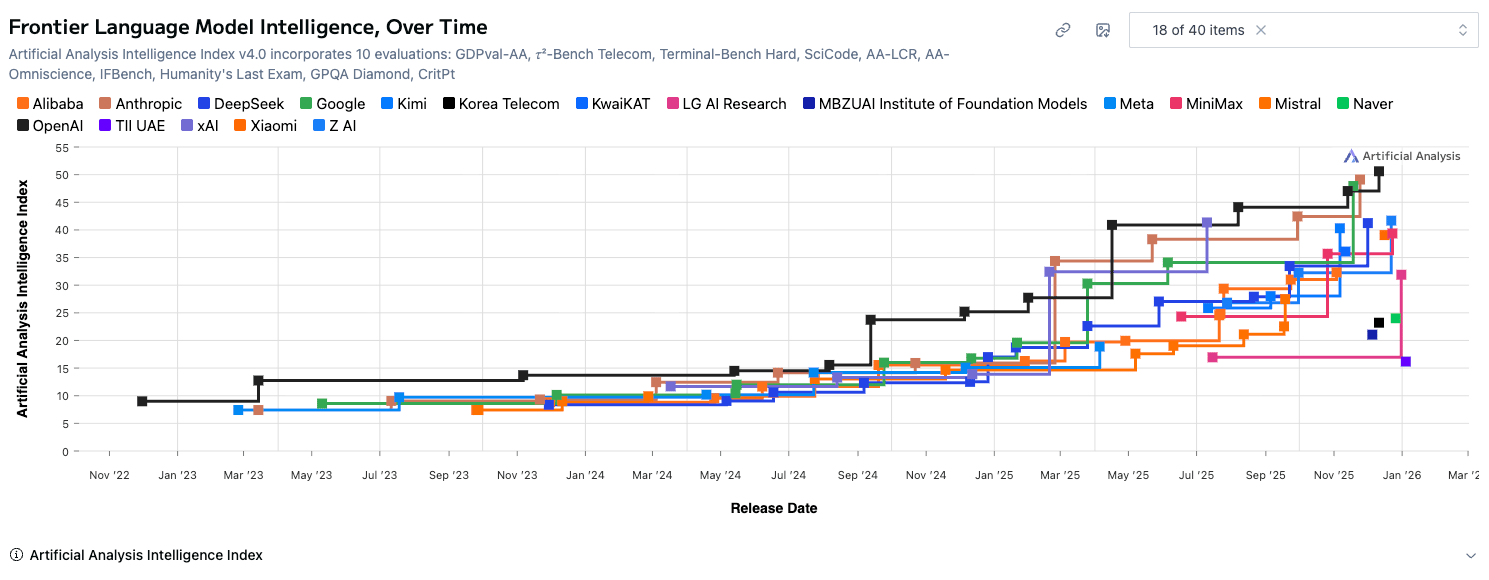
For most real tasks, writing, analysis, coding assistance, research summaries, the difference between models is now small. Small enough that switching models rarely changes your outcome in a meaningful way.
At the same time, cost is dropping fast. Hardware efficiency has improved so much that running powerful AI is far cheaper than it was just a few years ago. Companies like NVIDIA have pushed this forward by making each generation of chips dramatically more efficient.
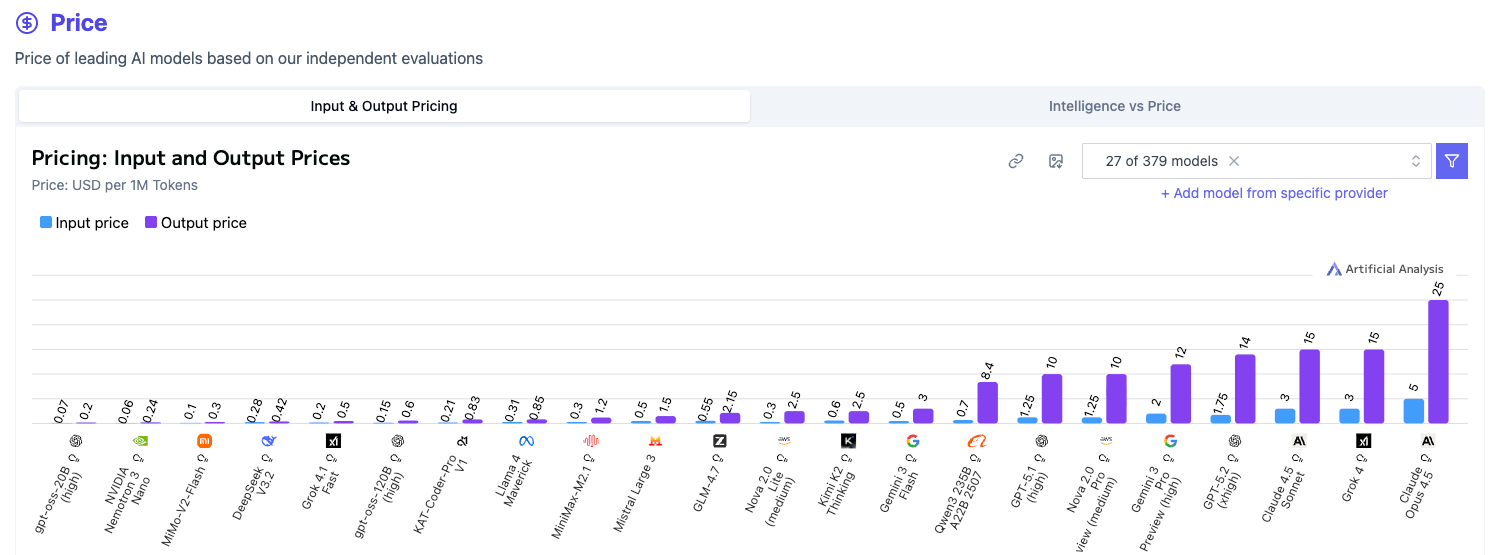
When something becomes both cheaper and more similar, it turns into a commodity.
3. What “commodity” means in practice
When electricity became reliable and cheap, nobody asked who had the smartest electricity. People focused on what they could build with it. Cloud computing followed the same path. AI is now doing the same.
This is the key shift in AI trends for 2026. The advantage no longer comes from the model itself. It comes from how well the AI fits into your actual work.
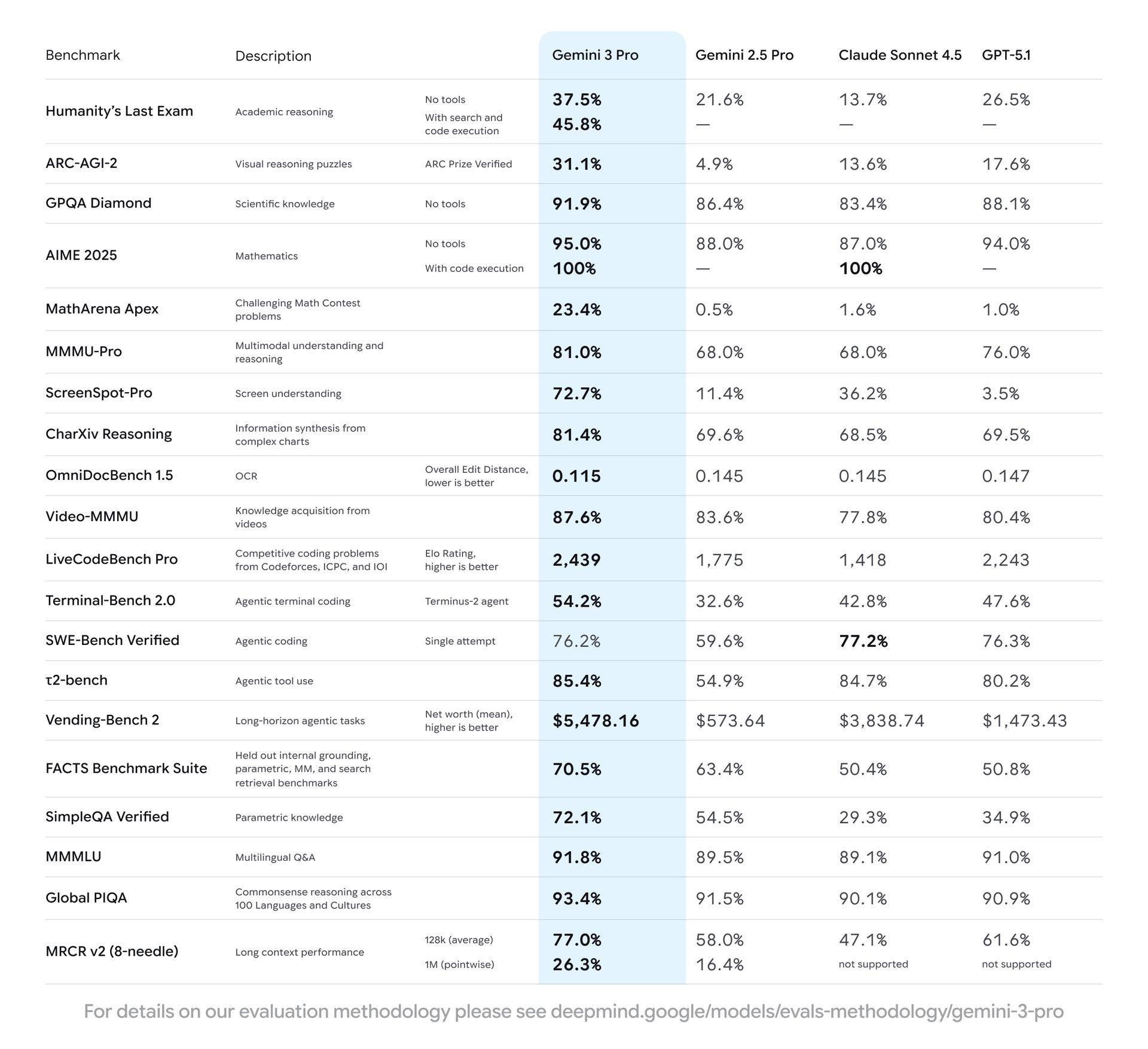
That’s why competition is moving away from raw intelligence and toward integration, distribution, and trust. OpenAI benefits from brand recognition. Google benefits because AI sits directly inside tools people already use. Anthropic benefits from credibility with developers and enterprises.
None of them are winning because their model is magically smarter. They’re winning because their AI is easier to use consistently.
4. How you apply this step by step
-
First, stop evaluating AI tools based on benchmarks or online comparisons. Those numbers rarely reflect your real work.
-
Second, list where you already spend most of your time. Email, documents, spreadsheets, design tools, code editors, project management software. This matters more than model choice.
-
Third, test AI inside those tools on one real task you do every week. Not a demo prompt. A real deliverable. See which option reduces steps and friction.
-
Finally, stick with the one that feels boring but reliable. If the AI disappears into your workflow and quietly saves time, that’s a win.
Trend #2: 2026 Is the Year of AI Workflows, Not AI Agents
If you follow AI trends online, it probably feels like everyone jumped straight from chatbots to autonomous agents. The idea sounds attractive: AI that runs entire projects on its own while you step away. In reality, that’s not where most value is being created in 2026.
The missing piece is workflows.
1. Why the industry jumped too far
After chatbots proved useful, the conversation immediately moved to agents that plan, act, and execute without humans. That leap skipped an important middle step. Most real work is not one single task. It’s a sequence of steps, checks, decisions, and handoffs. Fully autonomous agents struggle with that complexity.
This is why adoption data looks very different from the hype.
2. What the data actually says
According to research from McKinsey, fewer than 10% of organizations have successfully scaled fully autonomous AI agents in any business function. At the same time, enterprise data from OpenAI shows that a meaningful share of AI usage already happens inside workflow-specific tools, things like custom GPTs, internal AI projects, and task-based systems.
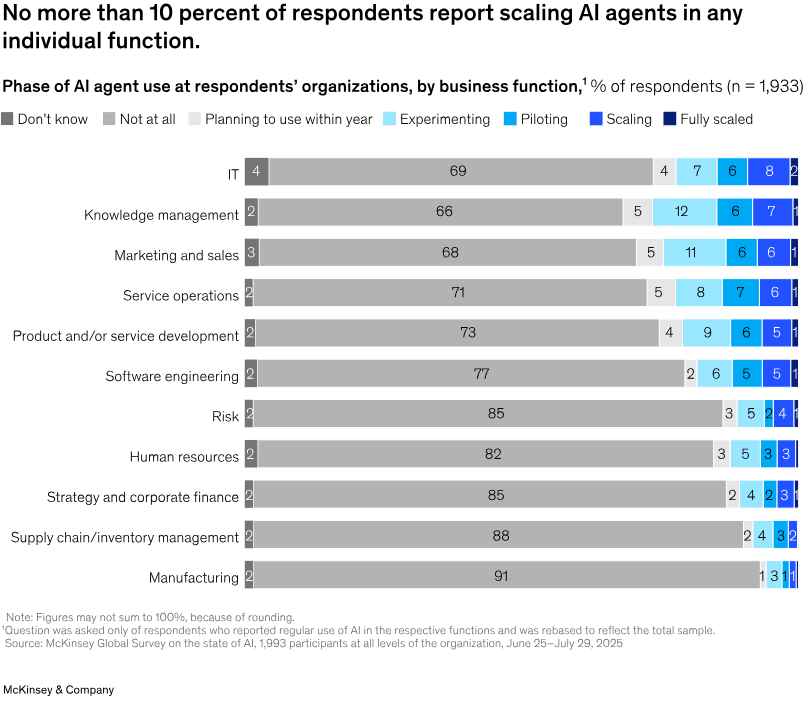
That gap matters. It tells you the market is choosing reliability over autonomy.
3. Why workflows win in practice
A workflow is simply a repeatable process where AI handles predictable steps and humans handle judgment. This structure works because it reduces risk. You can control inputs, review outputs, and catch errors before they cause damage.
Fully autonomous agents still struggle with security, data access, and trust. One mistake can propagate quickly. Workflows limit that blast radius.
This is why experts like Andrej Karpathy describe the coming years as the decade of agents, not the year of agents. The technology is moving forward, but adoption needs time.
4. What this looks like in real companies
In pharma, AI is used to analyze raw clinical data while humans validate results. This cuts preparation time dramatically without removing oversight. In utilities, AI handles authentication and routine customer questions, while humans step in for complex cases. In banking, AI scans legacy code and generates updated versions, but developers still review before deployment.
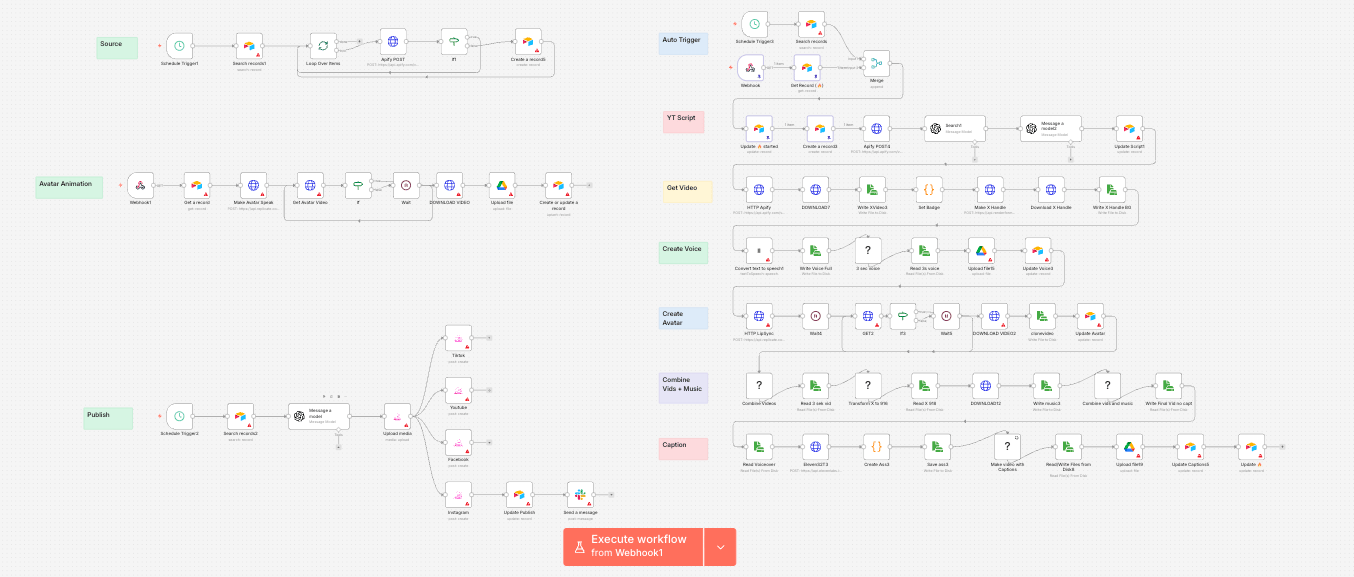
In all of these examples, AI does not replace the workflow. It strengthens it.
5. How you build an AI workflow step by step
-
Start small. Pick one recurring deliverable you create every week. A report, an email summary, a data cleanup task, anything repetitive.
-
Next, break that deliverable into steps. Identify which parts are predictable and rule-based. Those are the parts AI should handle first.
-
Then, decide where human judgment is required. This is usually the final review, prioritization, or decision-making step. Keep yourself there.
-
Finally, run the workflow the same way every time. Same inputs, same structure, same review points. Consistency is what makes workflows reliable.
6. Practical takeaway
One of the most important AI trends for 2026 is this shift from autonomy to structure. Stop waiting for AI to run everything on its own. Build workflows where AI does the boring parts and you stay responsible for decisions. That’s where real productivity gains come from, and it prepares you to adopt agents later without breaking your systems.
Trend #3: The End of the Technical Divide
For a long time, work was split into two groups. People who understood the problem, and people who could actually build the solution. If you were non-technical, you waited. You filed a request. You joined a queue. And very often, your request was deprioritized.
That structure is breaking down fast.
1. How work used to function
Sales, marketing, operations, and finance teams depended on technical specialists for dashboards, scripts, automations, and internal tools. Even small changes required help. This created bottlenecks and quietly slowed down entire organizations.
If you were the “dashboard person” or the “automation person,” that role came with leverage. You controlled execution.
2. What changed
AI tools now let non-technical people do things they simply couldn’t do before. Writing scripts. Cleaning messy data. Automating spreadsheets. Building internal tools. These are no longer locked behind engineering teams.
Enterprise data from OpenAI shows that around 75% of worker users are using AI to complete tasks they were previously unable to do at all. Not faster versions of old tasks. Entirely new capabilities.
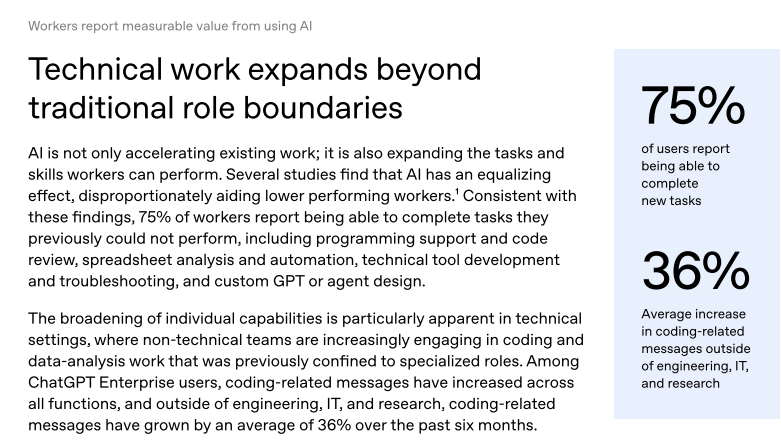
At the same time, coding-related AI usage by non-technical users has grown sharply. These are not developers. These are marketers, salespeople, operators, and managers.
Research from MIT confirms what’s happening. AI acts as an equalizer. It helps people with lower technical skills close the performance gap with experts faster than ever before.
3. Who loses advantage
If your role is defined purely by technical execution, your leverage is shrinking. Being the only person who can build a dashboard or automate a report is no longer rare.
This doesn’t mean technical skills don’t matter. It means technical skills alone are no longer enough.
4. Who gains massive advantage
The biggest winners in this shift are domain experts. People who understand customers, operations, constraints, and real-world problems. When the technical barrier disappears, their ideas can move directly into execution.
A marketer who understands audience behavior can now build their own analytics. A salesperson who understands deal flow can automate follow-ups. An operator who understands bottlenecks can prototype solutions without waiting.
5. How you apply this step by step
-
First, identify one task you usually outsource to a technical team. Something you assume you “can’t” do.
-
Second, describe the task in plain language, step by step, as if you were explaining it to a colleague. This is important. AI works best when you think clearly about the problem first.
-
Third, use AI to help you build the solution incrementally. Don’t ask for everything at once. Ask for one piece, test it, then move to the next.
-
Fourth, review the output critically. You are responsible for whether it makes sense in your context.
6. Practical takeaway
One of the most important AI trends heading into 2026 is that execution is no longer gated by technical skill alone. If you understand the problem deeply, AI gives you the ability to act on that understanding directly. Your advantage comes from judgment and context, not from knowing how to write code.
Trend #4: From Prompting to Context
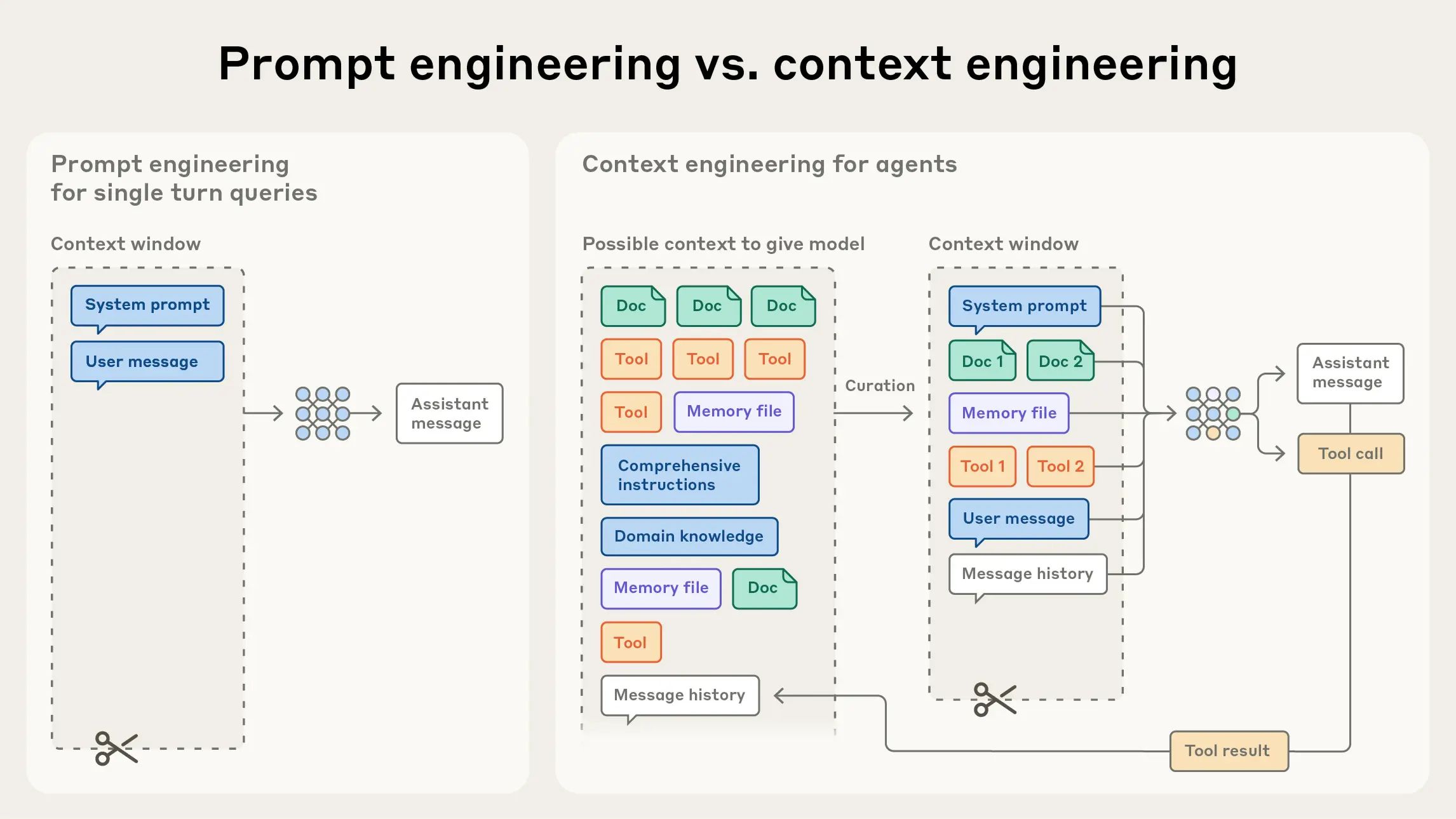
For the past two years, a lot of AI advice focused on prompting. How to phrase requests. How to structure instructions. How to talk to AI “the right way.” That skill helped early on, but one of the most important AI trends heading into 2026 is that prompting is no longer the main bottleneck.
Context is.
1. Why prompting matters less now
Modern models are much better at understanding vague or imperfect instructions. You don’t need to write long, structured prompts to get decent results anymore. You can be messy, incomplete, even unclear, and the model still figures out what you want most of the time.
That improvement quietly removes prompting as a long-term advantage. Everyone can do it. And everyone gets similar results.
2. The real problem AI still has
AI knows the public internet very well. It knows books, articles, code, and general knowledge. What it doesn’t know is your world. Your goals. Your files. Your past decisions. Your internal context.
This creates what I call the fact gap. The AI is smart, but blind. It’s like a very capable employee who isn’t allowed to open your folders, read your emails, or see what happened last quarter. When it gets things wrong, it’s usually not because it’s stupid. It’s because it’s missing information.
3. Why platform wars are heating up
This is why companies like Google and Microsoft are racing to embed AI deeply into productivity tools. Whoever holds your documents, emails, calendar, and notes also holds your context.
The more context an AI system has, the better it performs for you. And once you build that context inside one ecosystem, switching becomes painful. This is where lock-in comes from. Not better answers, but better understanding of your situation.
4. How you fix this step by step
-
First, clean up your files. This sounds boring, but it matters. Clear names. Logical folders. Consistent structure. If you can’t explain where something lives, AI can’t find it either.
-
Second, centralize related information. If your documents are in one place, your notes in another, and your tasks in a third, AI can’t connect the dots. Try to keep related work inside the same system whenever possible.
-
Third, when using AI, stop asking “how should I phrase this?” and start asking “does the AI have what it needs?” Before you expect a good output, make sure the relevant files, notes, or references are included.
-
Fourth, build habits around feeding context. Upload reference documents. Reuse project spaces. Keep long-running work in one thread or workspace instead of starting from scratch every time.
Trend #5: Advertising Is Coming to Chatbots
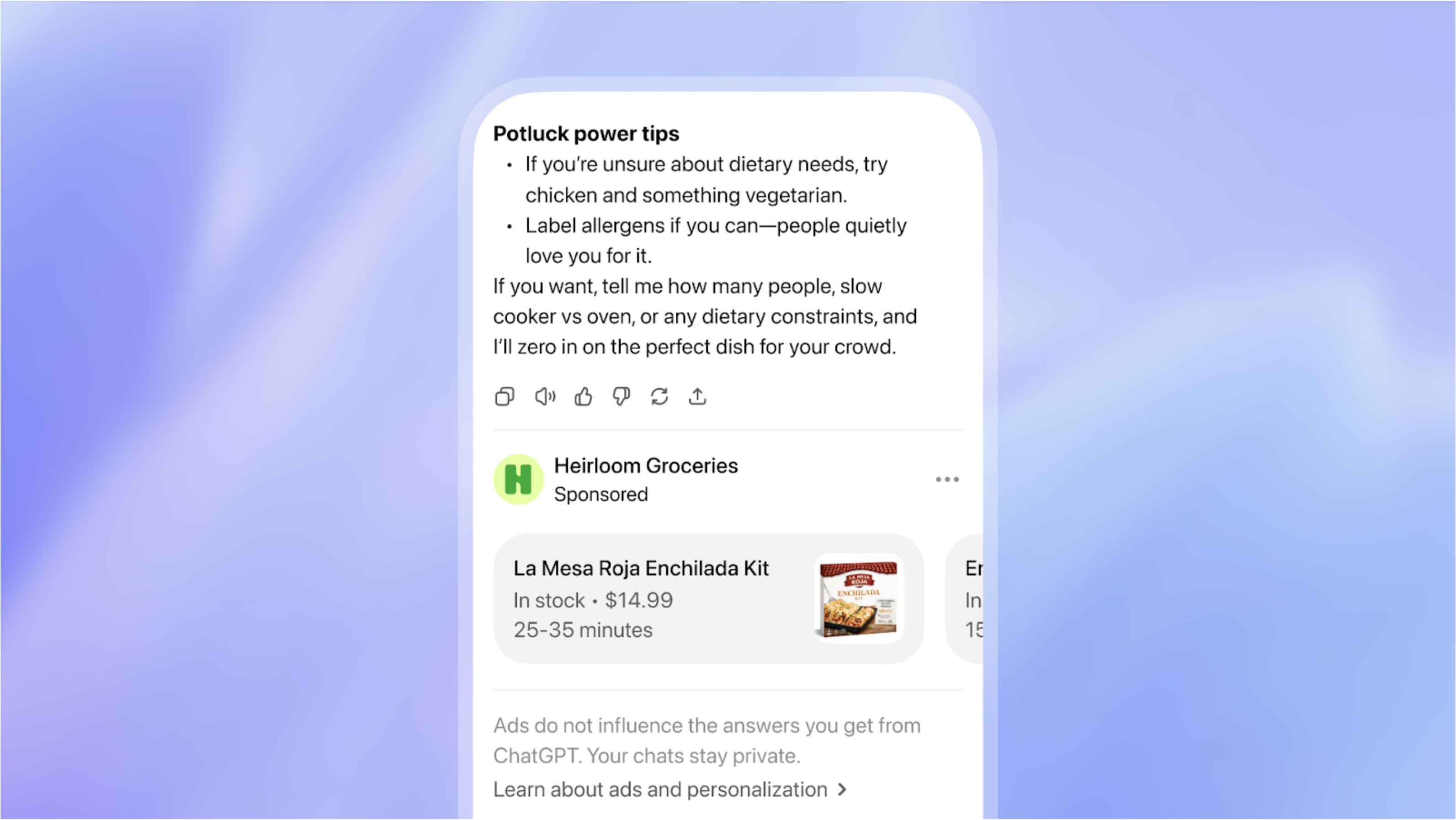
This is one of those AI trends people don’t like talking about, but avoiding it doesn’t change the outcome. Ads are coming to chatbots in 2026. The real question is not whether it happens, but how it happens and what it changes for users like you.
1. Why ads are basically inevitable
Running powerful AI is expensive. Training models, maintaining infrastructure, and serving millions of users all cost real money. If AI stays completely ad-free, the only way to cover those costs is subscriptions.
That creates a problem. The best AI tools end up locked behind paywalls. Over time, access becomes uneven. People who can afford subscriptions compound their advantage. People who can’t fall behind.
From a systems perspective, ads are what make broad access possible.
2. The YouTube comparison helps here
Think about platforms like YouTube. Ads are annoying, but they’re also the reason anyone can watch top creators without paying. If every high-quality video required a subscription, most people would simply be excluded.
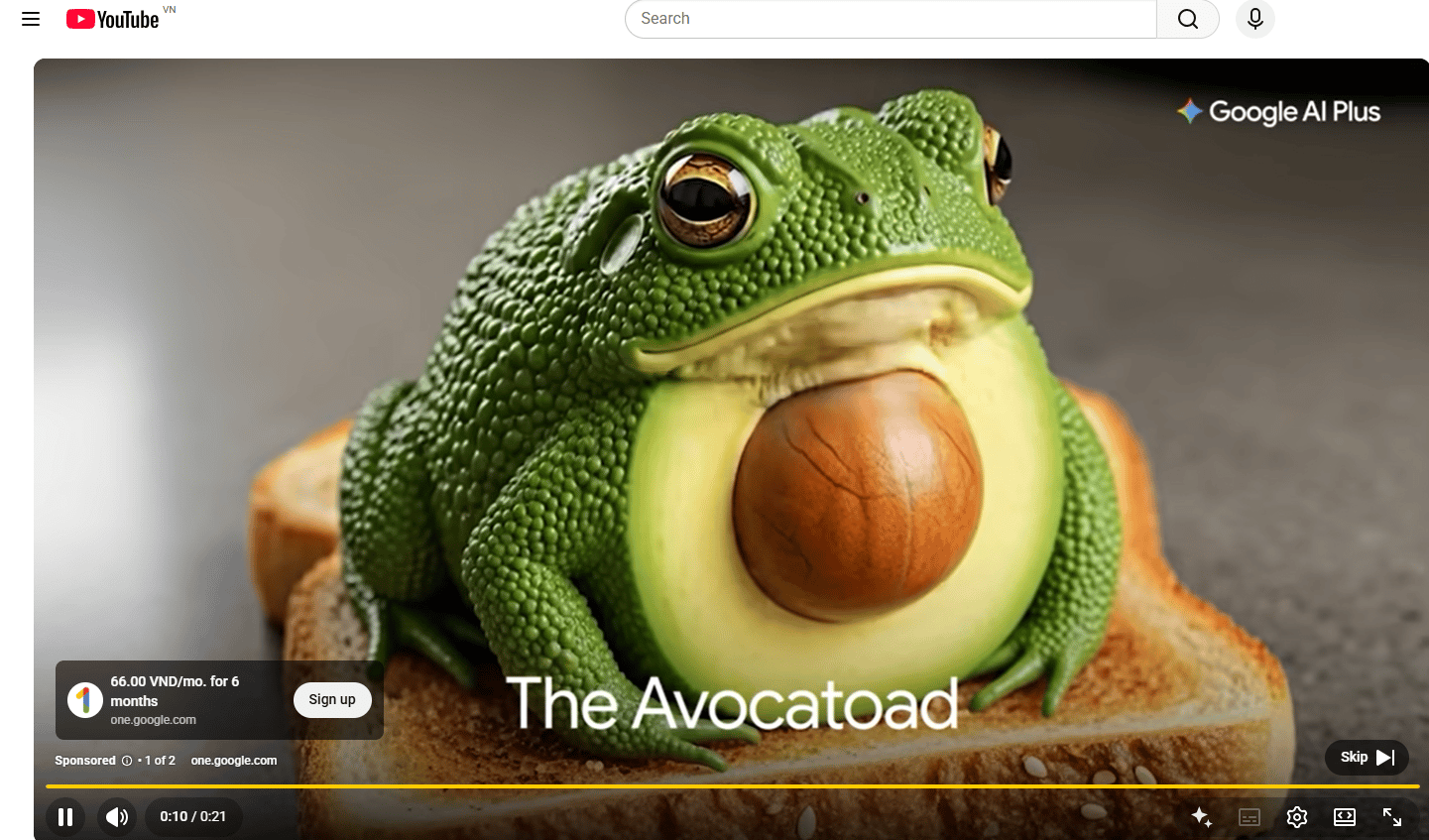
AI follows the same logic. An ad-supported tier allows students, nonprofits, casual users, and people in developing markets to use strong models without adding another monthly bill.
3. What chatbot ads will probably look like
The important detail is format. If AI starts recommending products directly inside answers, trust breaks immediately. Users won’t believe the response is neutral.
Industry experts expect a separation. Ads will likely appear as display-style elements, clearly marked and visually distinct from the conversation itself. Similar to banner ads on websites, not baked into the AI’s reasoning.
Companies like OpenAI are very aware of this trust problem. If users stop trusting answers, the product loses its value.
4. What this means for how you use AI
You don’t need to optimize for ads or worry about “gaming” the system. What you should expect is a trade-off. Free or cheaper access comes with some noise. Paid tiers remain cleaner.
The core skill doesn’t change. Using AI well still depends on context, workflows, and judgment. Ads don’t remove that advantage.
5. Practical takeaway
One of the more uncomfortable AI trends for 2026 is the arrival of ads in chatbots. You don’t have to like it. But it’s better to understand why it’s happening and focus on what matters: using AI effectively to save time and make better decisions.
Trend #6: From Chatbots to Robots
So far, most AI trends have focused on software. Text. Screens. Dashboards. In 2026, that starts to change in a visible way. AI is moving off the screen and into the physical world.
This doesn’t mean humanoid robots walking around your house. Not yet. The real shift is quieter and much more practical.
1. What’s actually changing
AI is being embedded into machines that already exist. Cars. Warehouse systems. Industrial equipment. These systems don’t need to look human to be disruptive. They just need to make better decisions than before.
Take autonomous driving. Companies like Waymo have logged tens of millions of fully autonomous miles, with significantly fewer accidents than human drivers.
In logistics, Amazon uses AI-powered robots to reduce the time from order to shipping at a massive scale. In manufacturing, industrial robots are being deployed faster than ever, especially in Asia.
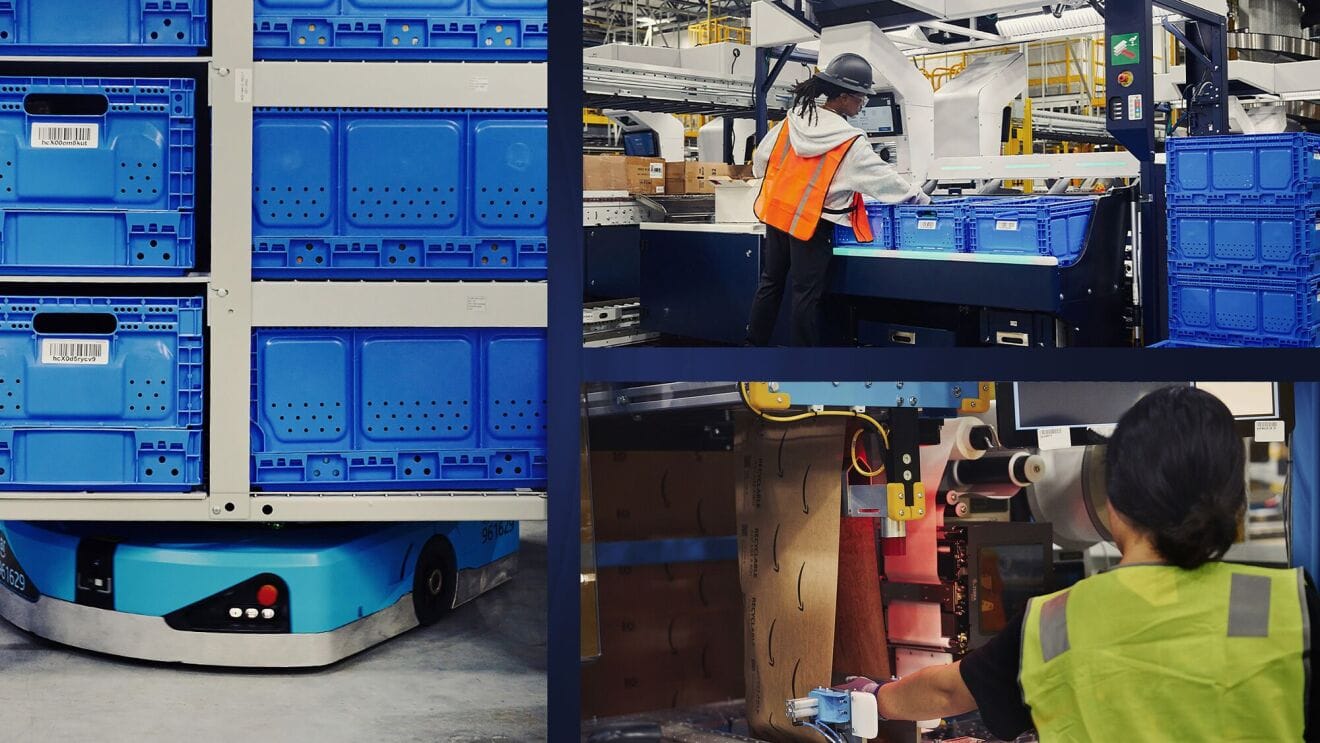
This isn’t experimental anymore. It’s operational.
2. The humanoid robot reality check
There’s a lot of hype around humanoid robots, but this is where expectations need to be realistic. Robotics experts like Rodney Brooks estimate we’re still many years away from seeing general-purpose humanoid robots in everyday life.
That’s fine, because they’re not required for this trend to matter.
3. The bigger shift most people miss
What’s really happening is what analysts like Mary Meeker describe as capital assets turning into software platforms. Machines used to depreciate and get worse over time. Now they improve through software updates.
A car, a warehouse robot, or a piece of equipment can be safer, faster, and smarter this year than last year without changing the hardware at all. That’s a fundamental change. Physical assets are starting to behave like apps.
4. What this means for work
In the short term, white-collar work feels the disruption first because software moves faster. But this trend makes it clear that physical jobs are not immune. The difference is timing. Automation in the physical world moves slower, but it compounds over longer periods.
This gives people time to adapt, but only if they pay attention early.
5. How to think about this step-by-step
-
First, separate headlines from reality. Ignore humanoid demos. Focus on where AI is already improving safety, speed, and cost in physical systems.
-
Second, understand that disruption won’t hit all jobs at once. It will appear in narrow tasks first, then expand.
-
Third, build adaptability. The most resilient people are not defined by a single task, but by their ability to learn new systems and supervise automated ones.
6. Practical takeaway
One of the most important long-term AI trends is that software intelligence is spreading into the physical world. You don’t need to fear robots, but you do need to understand that work tied to physical systems will change too. The advantage goes to people who adapt early and learn how to work alongside automation instead of ignoring it.
Trend #7: AI Judgment Becomes the Scarce Skill (Not AI Usage)
By 2026, using AI is no longer impressive. It’s expected. Everyone can generate text, analyze data, and automate basic tasks. This is one of the most important AI trends people underestimate: the real advantage shifts from using AI to judging AI.
1. Why this shift is happening
There are three forces coming together at the same time. First, model quality is converging. Most people get similar outputs from similar inputs. Second, AI is embedded everywhere. Mistakes no longer stay local. They scale. Third, automation reduces human checkpoints. Fewer people look at outputs before they’re used.
When those three combine, small judgment errors turn into big problems.
What companies are realizing now is that most AI failures don’t come from lack of capability. They come from over-trust.
2. What “AI judgment” actually means
AI judgment is not about being skeptical of everything. It’s about knowing where AI is likely to fail.
This includes spotting confident but wrong answers, recognizing when context is missing, understanding second-order effects, and deciding which tasks should not be automated at all. It also means knowing when to slow things down instead of optimizing for speed.
Good judgment adds friction on purpose.
3. Signals this is already happening
Enterprises are adding human-in-the-loop requirements to critical workflows. New tools are emerging to review, evaluate, and guardrail AI outputs. Managers are spending more time validating AI-generated work than producing original work themselves.
Interestingly, many failures now come from people trusting AI too much, not from people refusing to use it.
4. Who gains leverage in this environment
Pure executors lose leverage. Blind AI power users plateau quickly. The people who stand out are those who combine domain knowledge, systems thinking, and judgment.
They don’t ask, “Can AI do this?” They ask, “What happens if AI gets this wrong?”
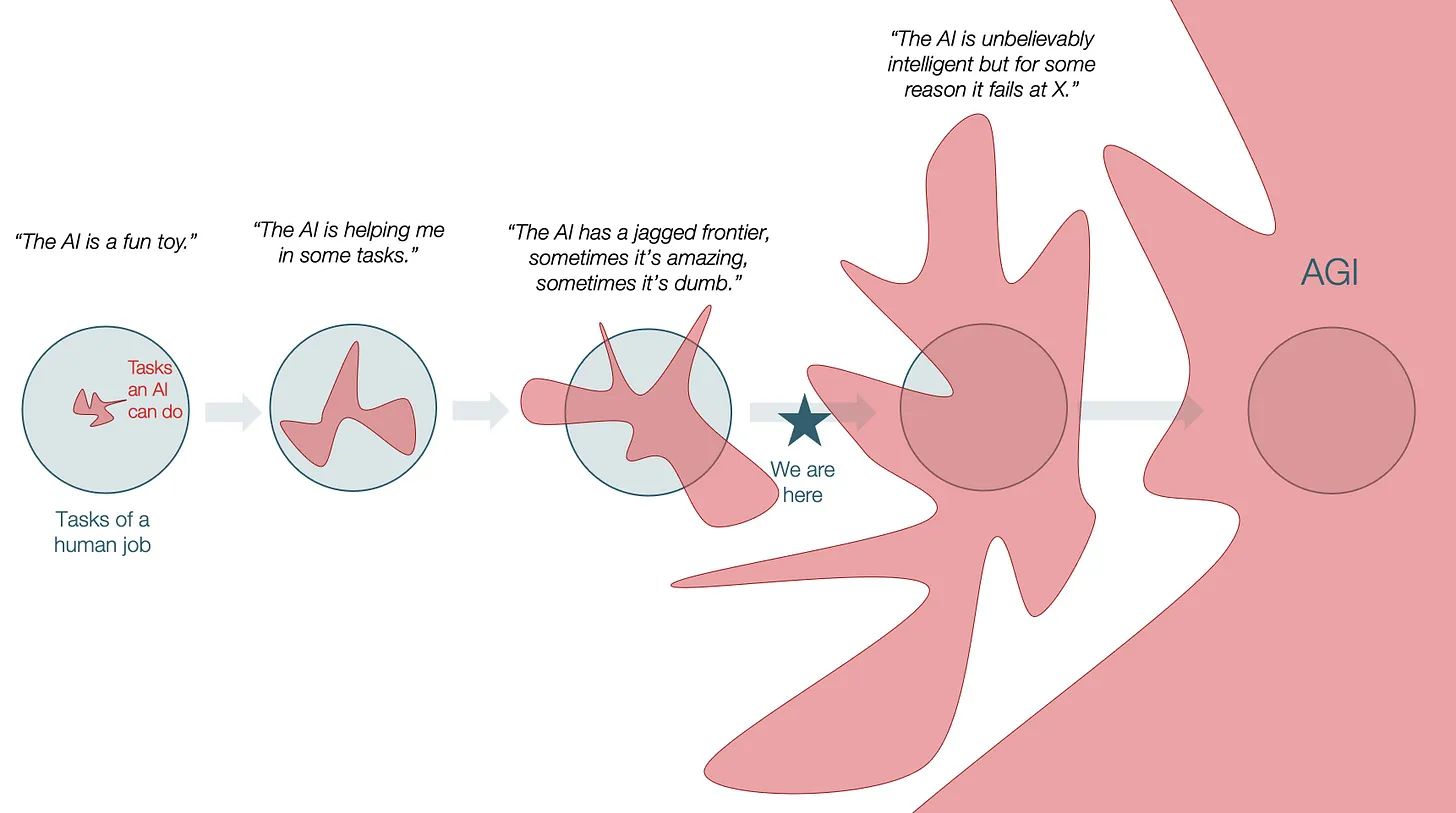
Researchers like Ethan Mollick often describe today’s AI landscape as a jagged frontier. AI is extremely capable in some areas and surprisingly weak in others. Navigating that uneven terrain is a human skill.
5. How you build AI judgment step by step
-
First, identify outputs that actually matter. Not drafts or brainstorming, but decisions, numbers, and actions that have real consequences.
-
Second, get in the habit of verifying critical outputs. Cross-check facts. Run edge cases. Ask the AI to explain its reasoning and look for gaps.
-
Third, design fail-safes. Add review steps. Set thresholds. Decide in advance where AI is allowed to act and where it must ask for confirmation.
Fourth, regularly ask yourself one question: where could AI be dangerously wrong here?
Trend #8: AI Shifts from “Answer Machine” to Decision Infrastructure
Most people still think of AI as something you ask questions to. You type a prompt, you get an answer, you decide what to do next. One of the most important AI trends heading into 2026 is that this mental model quietly breaks.
AI is no longer just answering questions. It’s shaping decisions before you even notice them.
1. What’s changing behind the scenes
Instead of waiting for a prompt, AI is being embedded upstream in workflows. It ranks, filters, prioritizes, and flags things automatically. By the time a human looks at something, AI has already decided what deserves attention and what doesn’t.
This happens because AI is now cheap and fast enough to run continuously. Organizations don’t want more suggestions. They want fewer decisions. Cognitive load has become the bottleneck, not information.
So AI moves earlier in the chain.
2. What this looks like in practice
Sales teams see leads that AI already ranked. Support teams read tickets AI already triaged. Product managers review backlogs AI already prioritized. Risk teams investigate issues AI already flagged.
Humans are still “deciding,” but only within the options AI presents.
This is a subtle shift, but it’s powerful. Defaults start to matter more than recommendations. What AI hides can be just as important as what it shows.
3. The hidden risk most people miss
When AI decisions are quiet and continuous, they’re harder to audit. Bad assumptions don’t fail loudly. They compound silently.
Over time, people lose situational awareness. They stop asking why something was prioritized or filtered out. They trust the system because it usually works.
This is not a technical risk. It’s an organizational one.
4. Who wins in this environment
The winners are not the people who get the fastest answers. They’re the people who understand decision design.
Operators who question defaults. Managers who ask how priorities are set. Leaders who demand transparency around why AI surfaces certain options and suppresses others.
These people don’t just use AI. They shape how AI influences behavior.
5. How to apply this step by step
-
First, map where AI already makes decisions for you. Look for places where it filters, ranks, suppresses, or prioritizes information before you see it.
-
Second, ask what assumptions are baked into those systems. What signals does the AI reward? What does it ignore?
-
Third, add visibility. Even simple explanations or logs help you understand why something surfaced.
-
Fourth, decide where humans must stay in control. Some defaults are fine. Others need regular review.
6. Practical takeaway
One of the most overlooked AI trends for 2026 is that AI becomes decision infrastructure, not just an answer engine. If you don’t design these layers intentionally, AI will design them for you. And once defaults are set, they’re hard to undo.
Conclusion: How to Actually Win in 2026
If you step back and look at all these AI trends together, one thing becomes very clear. 2026 is not about mastering a tool. It’s about learning how to work in an environment where AI is everywhere, cheap, and powerful by default.
This is what researchers often describe as the jagged frontier of AI. Some things work incredibly well. Other things fail in surprising ways. No one has full mastery yet, and that’s exactly why this moment matters. When systems are still messy and undefined, advantage goes to people who learn faster, not people who wait for certainty.
The biggest mistake I see is people waiting. Waiting for the “right” model. Waiting for agents to be fully autonomous. Waiting for a perfect roadmap. That hesitation costs more than using imperfect tools.
AI trends will keep changing. That’s a given. What doesn’t change is this: people who experiment, reflect, and adapt will always outperform people who wait for clarity.
If you are interested in other topics and how AI is transforming different aspects of our lives or even in making money using AI with more detailed, step-by-step guidance, you can find our other articles here:
-
This “Super Agent” Update Changed How You Work (ChatGPT Can Compete or Not?)
-
The “Lazy” AI Flywheel: How I’d Build Income With 10 Tools in 2026
*indicates a premium content, if any
Leave a Reply