
Can four TPUs survive in orbit?. .
Free AFIRE Guide | AI Academy | Advertise | AI Mastery A-Z

Plus: 7 Real Automated Jobs ChatGPT Work Can Do For You (Steal These Master-Prompts)
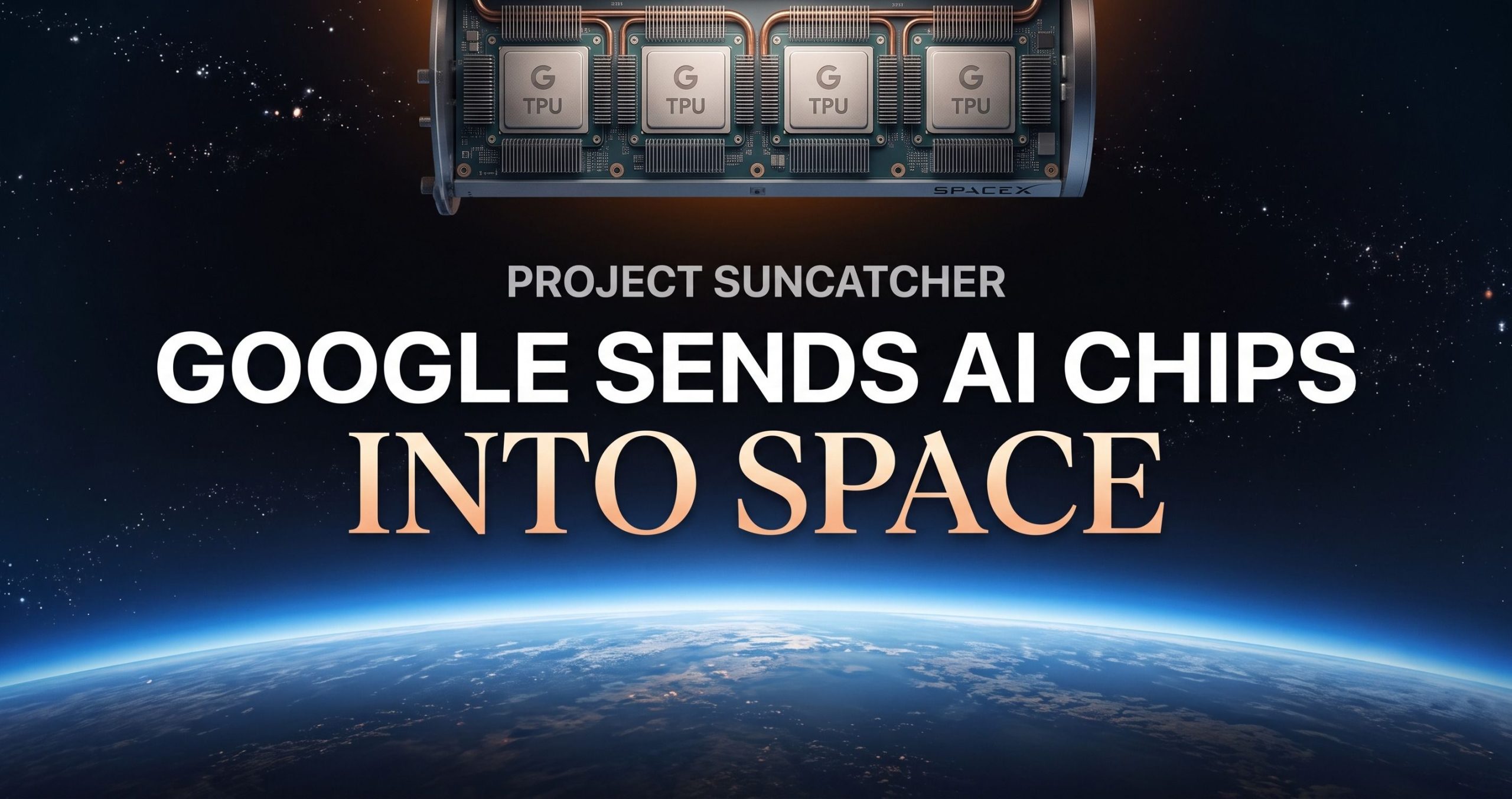
Google is sending four TPUs into orbit on a SpaceX rocket on October 1. Project Suncatcher’s first real test could show whether Google’s plan to run AI in space can work.
What’s on FIRE 🔥
IN PARTNERSHIP WITH HUBSPOT FOR STARTUPS
Most founders are one system away from turning LinkedIn into their best sales channel.

Engagement is easy to mistake for pipeline. On Sep 30, watch how a founder turns LinkedIn content into real outreach. Live. You’ll walk away with a repeatable system: what to post, who to reach out to, and how to sequence it.
Eligible startups also get the LinkedIn-to-Leads Toolkit: ad credits, Apollo, Captions, and HubSpot’s Prospecting Agent.
AI INSIGHTS
🛰 Google Launches TPUs to Space on SpaceX Rocket Next Week

Google is taking Project Suncatcher off the drawing board. Its first test satellite, built with Planet, is scheduled to launch on October 1 aboard a SpaceX Falcon 9. It’s roughly the size of a refrigerator and carries four Google TPUs, the chips Google uses for AI work. The goal is to see what happens when those chips actually run in orbit.
Google has a few big questions to answer:
-
Will the chips survive the trip? A rocket launch brings intense shaking and force. Google says its hardware passed ground vibration tests, but the satellite will provide the real result.
-
What happens under radiation? Google tested its Trillium TPUs with a proton beam while they ran AI tasks. The early results suggest the chips can withstand more radiation than they’d receive during a five-year mission.
-
How do you keep them cool? There’s no airflow in space. Google is testing heat pipes and radiators to move heat away before the TPUs overheat.
-
Can multiple satellites work together? In 2027, Google plans to test high-speed laser links between two satellites. Those links would be needed to share larger AI workloads across a future network.
The reason Google is interested in space is solar power. In a suitable orbit, panels could produce up to eight times more power than they do on Earth. This launch is an early test, but it will show whether putting AI chips in orbit is a practical step toward that bigger plan.
PRESENTED BY FRONT
Most AI Tools Weren’t Built for This

B2B customer issues move across teams and systems, not through a single chat window. A new Harvard Business Review Analytic Services briefing paper, sponsored by Front, breaks down where AI tools fall short in B2B service and what to ask before you invest.
AI SOURCES FROM AI FIRE
1. 7 Real Automated Jobs ChatGPT Work Can Do For You (Steal These Master-Prompts). I’ll show you 7 practical examples, the exact prompts behind them, and what each one can actually handle so you can see where ChatGPT Work fits into your own work.
2. The SIMPLEST Way to Start a Side Hustle From Zero to Paid Client in 30 Days with Astra. Have a 9-5? You can still build a real AI side hustle at night. Follow this simple 30-day system create your offer, and work toward your first paid project without complicated coding.
3. Video Lesson 7: Build Your First Autonomous AI Agent with Google Antigravity. If you want AI to handle unpredictable work (researching competitors, analyzing trends, and finding your next business move), see how I use Google Antigravity to build an AI agent for the job, step by step.
TODAY IN AI
AI HIGHLIGHTS
🤖 Black Forest Labs released FLUX 3 Action, a robot control model that beat Nvidia’s Cosmos 3 Nano on a simulation benchmark with less than half the parameters.
🏗️ The U.S. AI build-out could attract $10.3 trillion by 2032. Data centers are creating jobs, but could also raise costs and squeeze housing construction.
🎨 OpenAI hired Patreon co-founder Sam Yam to lead its new Creator Product division, with two former Patreon executives joining him.
🧩 Anthropic launched Claude Marketplace for agents, products, and services. Teams can browse 2,000+ connectors and plugins in one place.
🧠 OpenAI released MentalHealthBench, an open test built with 80+ mental health experts to assess model responses to stress, serious distress, and emergencies.
💻 Microsoft and Qualcomm are dropping the “Copilot+ PC” label from new devices. The AI features remain; the branding is changing.
💰 Big AI Fundraising: Lightspeed is raising a $250M India AI fund, already 80% committed. The firm will target early-stage AI startups, with investing expected to start within 2 months.
HOT PAPERS OF THE WEEK
1/ EvoOntology helps AI agents understand messy business data
Researchers from Renmin University of China, including Ju Fan and Shaolei Zhang, introduce EvoOntology, a self-improving knowledge layer that helps AI agents work across tables, databases, files, and documents. It runs through an MCP server and updates itself based on where agents make mistakes. What it means: Data agents could spend less time guessing where information lives and become more reliable on complex company data.
2/ Google teaches AI agent systems to improve themselves without overfitting
Researchers from Google Cloud AI Research, UNC-Chapel Hill, Stanford, and other universities introduce RRSI, a method for automatically improving the prompts, tools, memory, and control system around an AI model. It gains up to 4.7 points on unseen benchmarks while using 30% fewer policy tokens than unregularized self-improvement. Key idea: AI agents may improve their own workflows while still generalizing to new tasks instead of simply memorizing benchmarks.
3/ Tencent gives video world models a long-term 3D memory
Researchers from Tencent ARC Lab and Peking University, led by Wangbo Yu and Kunhao Liu, introduce WorldCrafter, a video world model that remembers places and objects as users move around a generated world. Its 3D-aware memory improves revisit consistency by 47.6% over the strongest baseline while supporting real-time, minute-long exploration. What it means: AI-generated worlds could start behaving more like persistent games, where locations and objects stay consistent even after you leave and return.
NEW EMPOWERED AI TOOLS
-
🌍 PixVerse R2 is a real-time world model that generates evolving audiovisual worlds from text, images, audio, and actions while remembering changes across the session.
-
💰 Bleetz Network matches startups with 2,000+ simulated VC agents to test investor fit and unlock contact details when there’s a match.
-
🛠️ Quiver GTM gives technical teams an agentic marketing system with durable product context, version history, MCP access, and human-approved workflows.
-
💳 tiun. gives AI builders one system for authentication, payments, customer data, and analytics, with one-command setup.
-
🚀 CREEM 2.0 helps AI builders sell globally with payments, taxes, usage billing, affiliates, and payouts handled in one platform.
AI BREAKTHROUGH
🧠 AI Just Hit 151 on a Mensa Norway Chart. Is That Genius?

A few years ago, chatbots struggled with the pattern puzzles in Mensa Norway’s online test. Now TrackingAI puts Anthropic’s Claude-5.1 Fable and OpenAI’s GPT-6 Astra Ultra (Vision) at 151, the highest score on its chart. That’s a striking jump. Here’s what the number means:
-
Two models reached the chart’s ceiling: TrackingAI’s results average each model’s last seven tests, so the ranking reflects repeated attempts rather than one lucky run.
-
151 is TrackingAI’s reported score: Mensa Norway’s own online test reports results from 85 to 145 and says it gives only an indication of IQ. It isn’t an official supervised IQ test.
-
The next test matters more: Mensa Norway’s puzzles are public, so models may have encountered them during training. TrackingAI also runs an unpublished puzzle test to check how models handle less familiar questions.
The public chart has reached its limit for these models. That shows real progress on pattern puzzles, but 151 doesn’t mean a chatbot has a human IQ of 151. The more interesting question is how well these models reason through problems they’ve never seen before.
We read your emails, comments, and poll replies daily
Hit reply and say Hello – we’d love to hear from you!
Like what you’re reading? Forward it to friends, and they can sign up here.
Cheers,
The AI Fire Team
Leave a Reply