
Skip the fluff and gain the skills companies need. Learn Python, RAG, and scaling to land high-paying roles in the fast-growing 2026 AI job market.. Llms (Large Language Models), Ai Tools, Ai Jobs.
TL;DR
The AI Engineer Roadmap is a 5-level journey designed to transition you from a total beginner to a professional capable of building “intelligent houses” rather than just “static walls.” In 2026, being an AI Engineer isn’t about inventing new algorithms, it’s about mastering Python, API Architecture, and RAG (Retrieval-Augmented Generation) to plug existing intelligence into real-world products. By moving through foundational software skills to advanced LLMOps, you’ll learn to build apps that don’t just chat, but reason, scale, and save companies significant operational costs.
Key points
Tool Integrator vs. Researcher: AI Engineers use existing models (OpenAI, HuggingFace) to solve practical business problems rather than developing new math theories.
RAG is Essential: The core of the 2026 job market is building “Intelligent Systems” that can read and reason across a company’s private, proprietary data.
Scale and Optimization: Professionalism is defined by Level 4 and 5 skills like Docker for consistency and Redis Caching to slash API costs.
Table of Contents
Introduction
The job you have today might not exist in 3 years. That’s not a scare tactic, that’s what the data is already showing.
-
Goldman Sachs estimates AI could replace 300 million jobs globally.
-
Klarna replaced 700 employees with a single AI chatbot.
-
Duolingo just cut 10% of its translation team for the same reason.
And these are only the big names willing to admit it. People who survive aren’t the smartest ones in the room. They’re the ones who learned how to work with AI before everyone else caught on.
The good news is you don’t need a computer science degree. You don’t need to know how to code right now.
This AI Engineer Roadmap breaks the whole journey into 5 levels, built specifically for people starting from zero, so by the time your industry catches up, you’re already ahead of it.
I. What Does an AI Engineer Actually Do?
Before jumping into the roadmap, it’s worth getting clear on what an AI engineer actually does, because this role gets confused with data science all the time, and that confusion sends a lot of people in the wrong direction.
Here’s a simple way to think about it:
-
A software engineer builds a house, the walls, the roof, the doors.
-
An AI engineer makes that house smart. The sensor that turns on the lights when you walk in. The voice assistant that plays music when you ask.
→ That’s the layer you’re responsible for.
In practice, that means:
-
You use models that already exist, you don’t build them from scratch
-
You plug that intelligence into real products people actually use
-
You solve problems with tools, not with math theories
You don’t need to be a genius who invents new algorithms. You just need to know how to pick the right tools and make them work together, and that’s exactly what this roadmap is built to teach you.
II. AI Engineer Roadmap Level 1: Build Your Foundation
You can’t build a skyscraper on sand. Before you touch a single AI tool, you need a strong base. The best way to think about it is through the SALT framework – 4 skills you have to lock in first.
Key takeaways
-
S – Software Fluency: Focus on Python basics like Functions and Loops; use interactive platforms like Coddy.tech to avoid tutorial hell.
-
A – API Architecture: Understand that APIs are the bridges; you send a request (the order) and the AI returns the data (the meal).
-
L – Lifecycle (Git): Learn to use Git and GitHub to “save” your progress and collaborate with professional teams without losing work.
-
T – Tech Stack: Get comfortable with the “Full Stack”, React for the front, FastAPI for the back, and MongoDB for the data.
1. S – Software Fluency (Learning Python)
Python is the language of AI. Almost everything you’ll do in this field runs on Python, and the good news is it’s one of the easiest languages to pick up.
The trap most beginners fall into is “tutorial hell”, you watch a video, feel like you get it, then open a blank file and your mind goes completely empty.
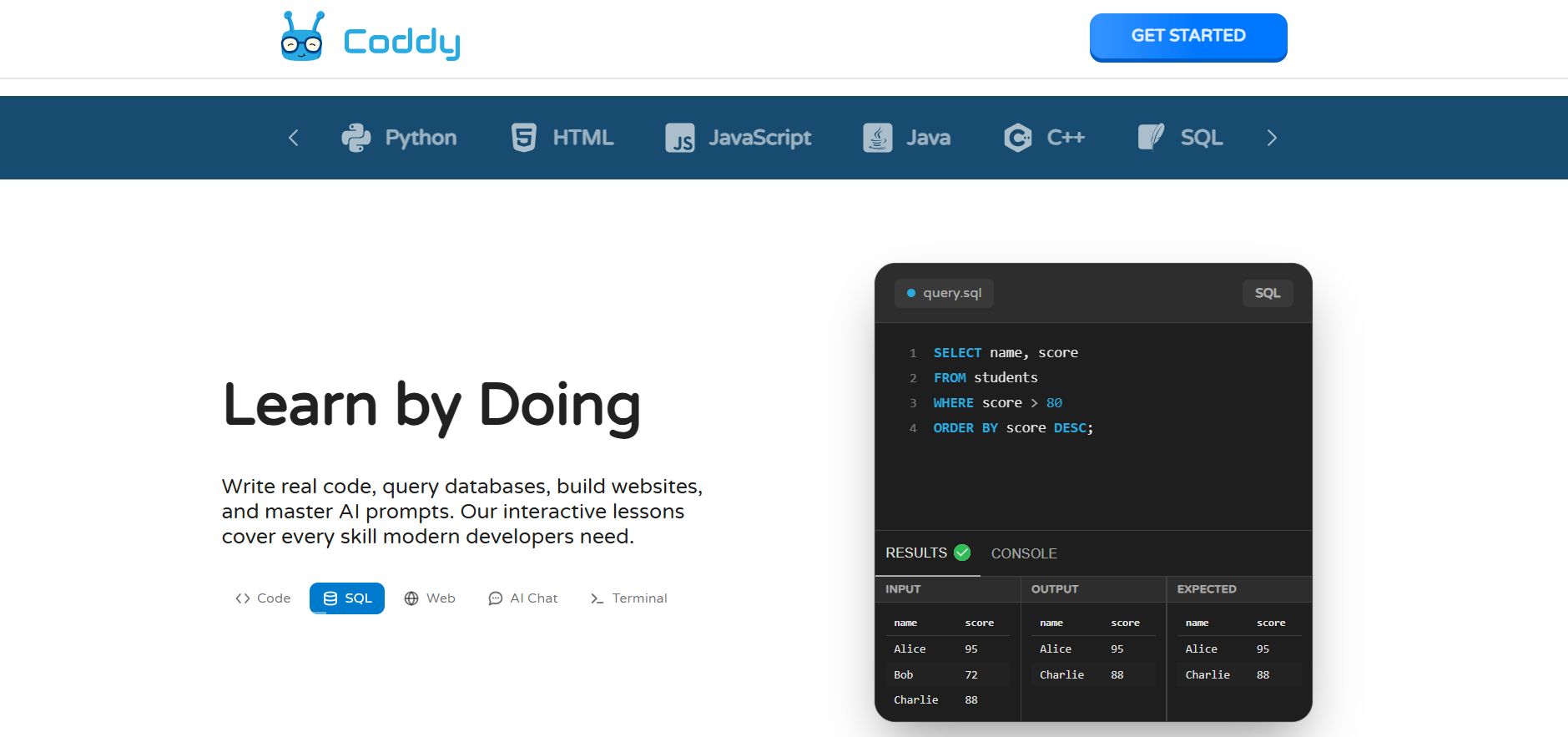
The fix is to learn by doing, not by watching. A tool like Coddy.tech forces you to write code immediately after learning each concept, which is exactly how it sticks.
The core things to focus on:
-
Variables – how to store information
-
Lists and Dictionaries – how to organize and hold lots of data
-
Functions – how to write code you can reuse instead of repeating yourself
-
Loops – how to make the computer repeat a task automatically
2. A – API Architecture
Once you know Python, the next thing to understand is how AI models actually receive your requests and send answers back. That’s where APIs come in.
API stands for Application Programming Interface, and the easiest way to picture it is a waiter at a restaurant.
You’re the customer, the kitchen is the AI model. You don’t walk into the kitchen yourself, you tell the waiter what you want, they relay it, and they bring your food back. APIs work exactly the same way between your app and the AI.
In practice, you’ll use Python’s requests library to send those messages and handle what comes back.
Learn How to Make AI Work For You!
Transform your AI skills with the AI Fire Academy Premium Plan – FREE for 14 days! Gain instant access to 500+ AI workflows, advanced tutorials, exclusive case studies and unbeatable discounts. No risks, cancel anytime.
Start Your Free Trial Today >>
3. L – Lifecycle & Version Control (Git)
Every professional project involves mistakes. Code breaks, features get deleted by accident, things stop working for no obvious reason. Git is the safety net that lets you roll back to any previous version of your code like hitting an undo button.

GitHub is where those saves live online, and every single company in tech uses it. Without knowing Git, working in a professional team is basically impossible.
Start with GitHub’s beginner guide, it walks you through your first commit in under 15 minutes.
4. T – Tech Stack
The final piece of the foundation is knowing how to build a complete app from end to end, not just individual scripts. That means getting comfortable with 3 layers:
-
Database – using MongoDB to store and retrieve information
-
Backend – using Flask or FastAPI to handle the logic and requests
-
Frontend – using React to build the interface people actually see and use
Once these four pieces are in place, you’re ready to start working with real AI tools without getting lost every five minutes.
III. AI Engineer Roadmap Level 2: Use Real AI Models
Level 2 is where the fun starts. This is called Controlled Intelligence. You’re not making your own AI; you’re using the best ones available.
1. Using the OpenAI API
You’ve probably used ChatGPT as a regular user. But as an engineer, you interact with it completely differently, through the OpenAI API, which lets you embed AI directly inside your own programs.
The difference is huge. Instead of typing into a chat box, you’re writing code that sends requests to the model automatically and does something useful with the response.
A simple example: a script that reads through 100 customer emails and flags every single complaint without you touching a thing.
Here’s what a basic prompt for that looks like in practice:
You are a helpful assistant.

Take the following email text and determine if the sentiment is "Positive", "Neutral", or "Negative".

Then, extract the customer's main problem in one sentence.

Email: I've been waiting for my shoes for three weeks and no one is answering me!
That one prompt, wrapped in a loop, can process an entire inbox in seconds.
2. Exploring HuggingFace
Once you’re comfortable with the OpenAI API, HuggingFace is the next place to explore. Think of it as the App Store for AI models, except most of it is completely free.
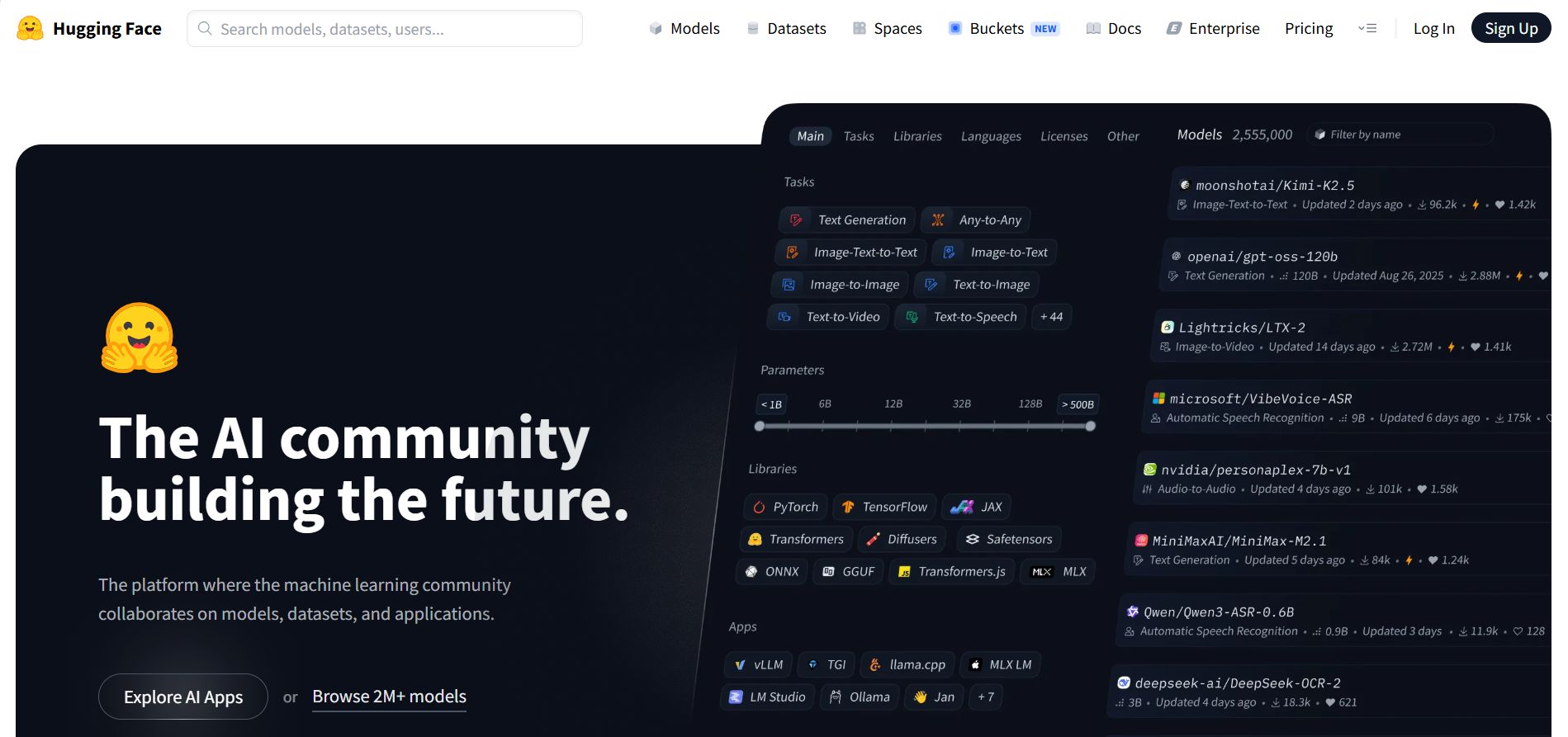
You’ll find models that handle almost anything:
-
Translating between languages
-
Describing what’s inside an image
-
Recognizing and transcribing sounds
-
Classifying text, summarizing documents, and more
The best way to learn here is to just pick a few pre-trained models and run them. You don’t need to understand how they work under the hood yet, you just need to get comfortable calling them and using what they return.
If you want a structured way to learn this, check out DataCamp. They have an “Associate AI Engineer” track. It’s very hands-on and covers exactly what you need for this part of the AI Engineer Roadmap.

IV. AI Engineer Roadmap Level 3: Build Intelligent Systems With RAG
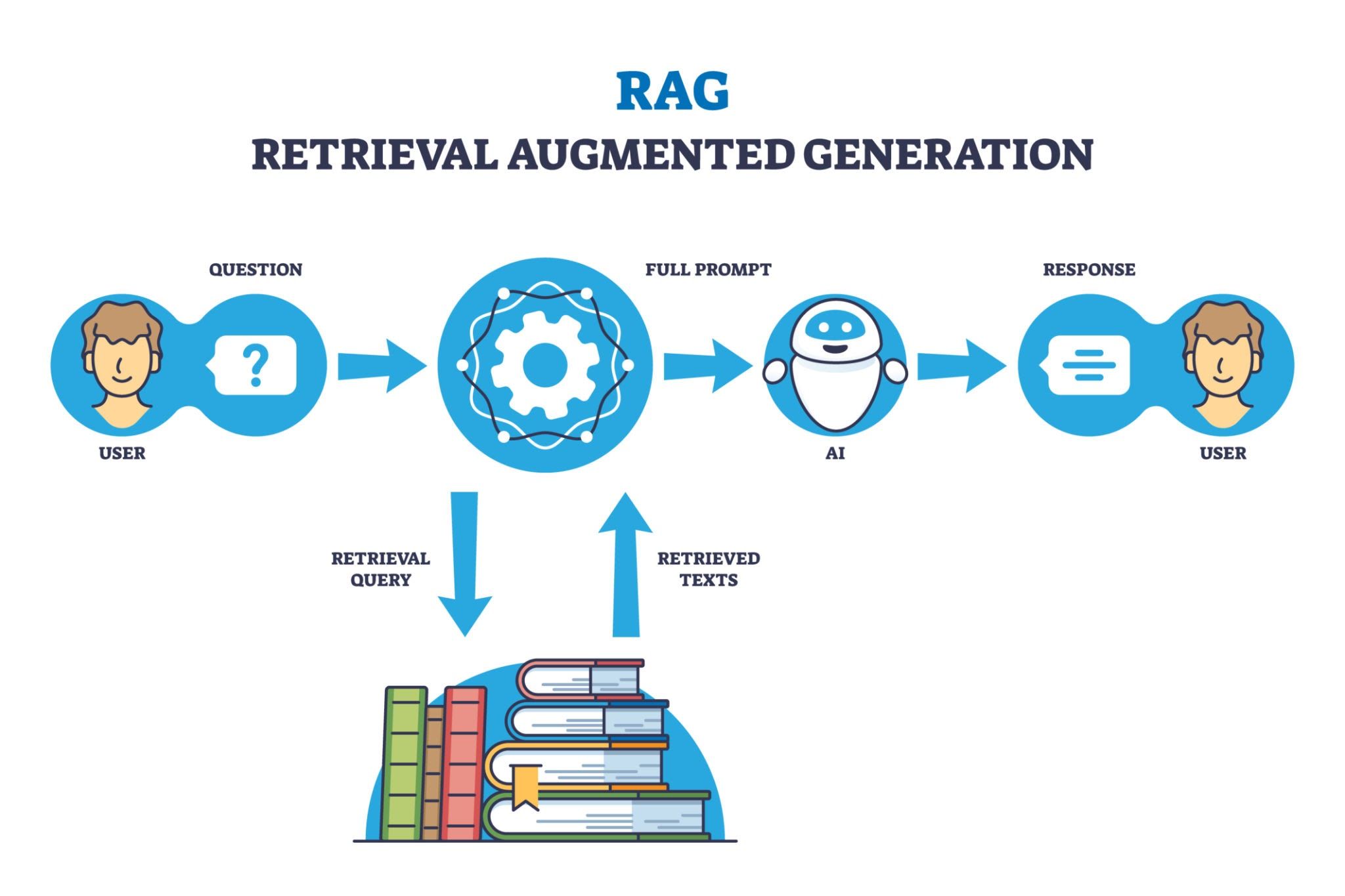
Level 3 is Intelligent Systems. This is the most important part of the job in 2026. Most companies don’t want a generic AI. They want an AI that knows their data. This is called RAG (Retrieval-Augmented Generation).
1. How RAG Works
Imagine you have a 500-page manual for a company. GPT doesn’t know what’s in that manual. RAG fixes this in 4 steps:
-
Chunk – break the manual into small, manageable pieces
-
Embed – convert those pieces into numbers (vector embeddings)
-
Store – save those numbers in a Vector Database like Pinecone or Weaviate
-
Retrieve – when a user asks a question, find the most relevant pieces and feed them to the AI before it answers
The result is an AI that sounds like it knows your entire company inside out, even though it only just read the relevant page seconds ago.
Here’s what a RAG prompt looks like in practice:
Use the following context to answer the user's question. If the answer is not in the context, say you don't know. Don't make things up.

Context: Our company refund policy allows returns within 30 days if the tag is still attached.

Question: Can I return my shirt after 40 days?
Notice how the AI isn’t expected to already know the policy. You’re feeding it the relevant information at the moment it needs it, which is the entire point of RAG.
2. Using LangGraph and MCP
Once you understand RAG, the next step is learning how to build more complex AI workflows. 2 tools make this possible:
LangGraph (from LangChain) lets the AI think in steps instead of giving one flat answer. A typical flow might look like: search for the data → check if it’s accurate → write the final response. This is how you build AI that reasons through a problem rather than just guessing.

MCP (Model Context Protocol) is a set of rules that tells the AI exactly how and when to use external tools, like Google Search or a calculator. Without it, the AI gets confused about when to reach for those tools. MCP keeps everything organized and predictable.
V. AI Engineer Roadmap Level 4: Deploy Your Work
Level 4 is where the real challenge begins. Building an app that runs perfectly on your own laptop is one thing.
Building that same app so 10,000 people can use it at the same time without it crashing is a completely different problem, and that’s exactly what this level is about.
1. Docker – Eliminate “It Works on My Machine”
Every developer has been through this moment: the code works perfectly on your machine, then you send it to someone else and it breaks immediately. Docker eliminates that problem entirely.
What Docker does is wrap your entire app inside a container, a self-contained package that includes everything the app needs to run.
If it works in the container on your machine, it’ll work the exact same way on any server anywhere in the world. No more “it works on my end” situations.
2. Cloud Hosting (AWS or Google Cloud)
Once your app is containerized, it needs a home on the internet. That’s where cloud platforms come in. AWS and Google Cloud are the two biggest names, and both give you access to powerful servers that can handle massive amounts of traffic.
What you’ll learn at this stage:
-
How to deploy your code so it’s accessible to anyone with a browser
-
How to scale your server up when traffic spikes
-
How to keep your app running reliably without babysitting it manually
3. Redis Caching
This is the move that separates junior engineers from professionals. Every time someone asks your AI a question, you’re paying for it.

Now imagine 1,000 different users asking the exact same question, “What’s your return policy?” → That’s 1,000 separate API calls, and the bill adds up fast.
Redis solves this by storing the answer the first time a question gets asked. The next 999 times, it returns that stored answer instantly, at zero cost.
It’s a small thing to implement and one of the highest-impact optimizations you can make for any AI product.
VI. AI Engineer Roadmap Level 5: Run Your AI Product
Reaching Level 5 means you’re no longer just building AI products. You’re running them like a business. This final level is called Strategic AI Operations, or LLMOps, and it’s where you shift from thinking like a developer to thinking like someone who owns the outcome.
1. Evaluation with DeepEval
Shipping an AI product is not the finish line. Once it’s live, the real question becomes:
-
Is it actually doing a good job?
-
Is it giving accurate answers?
-
Is it ever making things up?
-
Is it responding in a way that could embarrass the company?
DeepEval is a tool that automatically runs quality checks on your AI’s responses so you don’t have to monitor every single conversation manually.
It flags answers that are inaccurate, unhelpful, or off-tone before they become a real problem.
2. Analytics – Follow the User Behavior
Numbers tell you what’s working, but user behavior tells you why something isn’t. Tools like PostHog let you see exactly how people are interacting with your AI product in real time:

-
Which questions keep coming up that the AI can’t answer properly
-
Where users drop off or show signs of frustration
-
Which features are actually being used and which ones are being ignored
Looking at real user data is the only reliable way to keep improving a product after it launches.
3. Model Routing
Not every task needs the most powerful, most expensive model available. Sending a simple FAQ question to GPT-5 when a lighter model could handle it just as well is like hiring a senior engineer to reply to basic emails. It works, but it’s wasteful.
A smart routing setup looks like this:
|
Task type |
Model to use |
Why |
|---|---|---|
|
Simple FAQs, formatting, short lookups |
Claude Haiku or GPT-4o Mini |
Fast and cheap |
|
Daily coding, reasoning, writing |
Claude Sonnet |
Balanced performance |
|
Complex architecture, hard problems |
Claude Opus or GPT-4 |
Worth the cost |
Knowing how to route tasks to the right model is one of those details that shows you understand not just how to build AI products, but how to run them responsibly.
Your Full Roadmap at a Glance
|
Level |
Name |
Core Skills |
|---|---|---|
|
1 |
Foundation |
Python, APIs, Git, Full Stack basics |
|
2 |
Controlled Intelligence |
OpenAI API, HuggingFace, prompt engineering |
|
3 |
Intelligent Systems |
RAG, Vector DBs, LangGraph, MCP |
|
4 |
Deployment |
Docker, AWS/Google Cloud, Redis caching |
|
5 |
LLMOps |
DeepEval, analytics, model routing |
Conclusion
Becoming an AI engineer in 2026 isn’t about being a genius. It’s about being consistent. I know it looks like a lot, but you don’t have to do it all today.
Start with Level 1. Learn Python. Build a simple website. Once you feel good about that, move to Level 2 and play with the OpenAI API.
The high salaries are there because this is hard work, but it’s work you can do if you follow a plan. Don’t skip the basics. A house with a smart doorbell is useless if the walls fall down.
If you are interested in other topics and how AI is transforming different aspects of our lives or even in making money using AI with more detailed, step-by-step guidance, you can find our other articles here:
-
Building Apps with Bolt: A No-Code Guide to Turning Ideas into Reality
-
Detailed Guide: How To Automatically Get Unlimited High-Quality LinkedIn Jobs*
-
Prompt Engineering Automation: Build a Mini AI Assistant with n8n
-
Discover My Ultimate AI Tools Productivity Kit for 2024*
*indicates a premium content, if any
Leave a Reply